
A locked phone is not always a disconnected phone.
Standard pouches stop access. Signal-blocking pouches stop access and connectivity. For UAE schools dealing with hotspotting, tethering and hidden usage, that difference is the whole point.
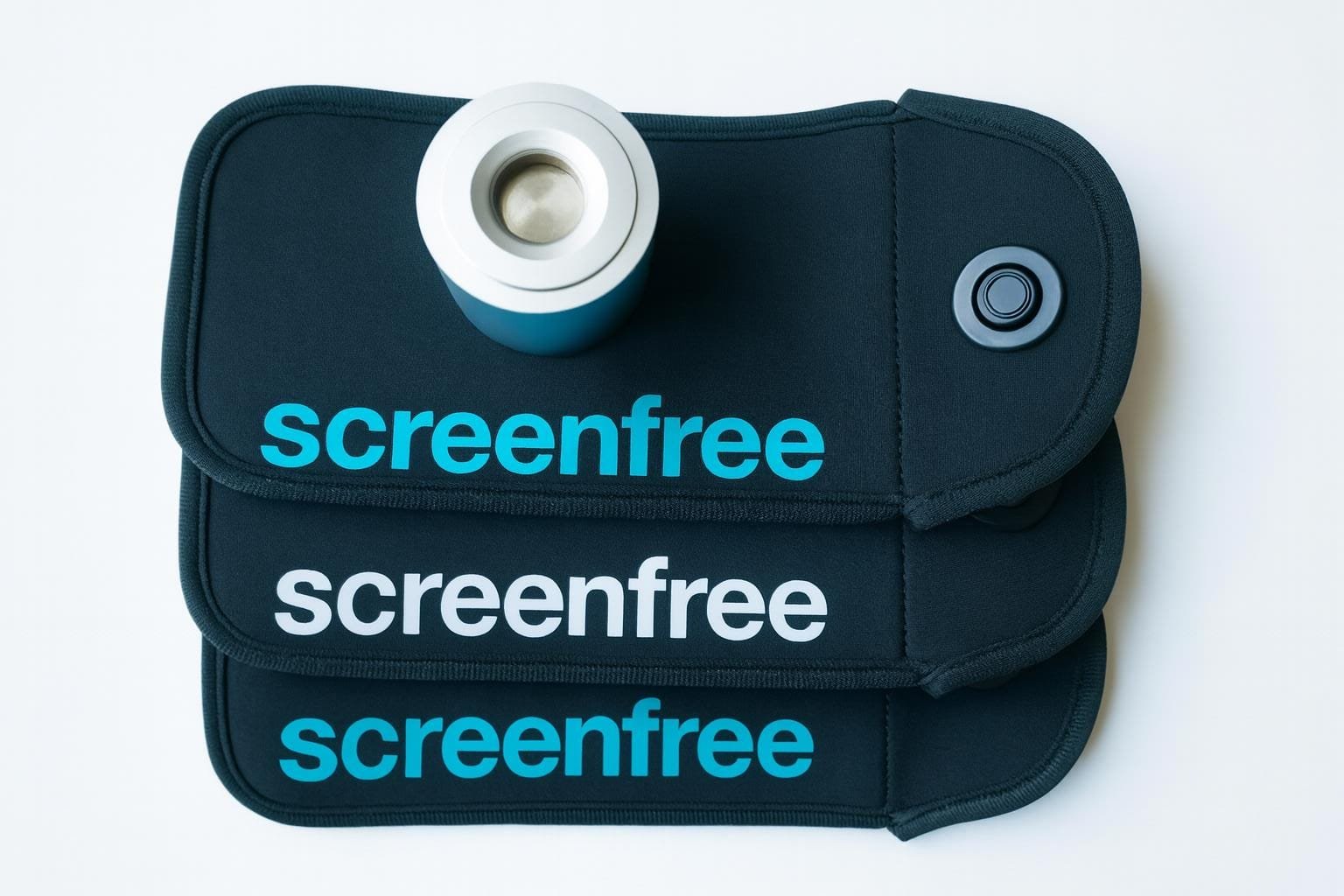
A locked phone is not a disconnected phone.
Most phone-management tools solve the visible problem. The phone is out of sight, out of hands, and the classroom looks calmer. That is a real improvement, and for many schools it is enough.
But a phone that is simply locked away is still switched on and still connected. It can act as a hotspot for other devices, tether a laptop or tablet, sync to a smartwatch on the wrist, and keep pulling notifications all day.
The hidden problem is connectivity.
From the outside, the rule appears to be working. Underneath, the connection may still be active. Signal-blocking closes that gap.
See the difference in seconds.
A quick demonstration of signal-blocking in action while the phone is sealed inside the pouch.
Signal-blocking works through passive shielding. It is not a jammer, and it does not interfere with the school network.
What signal-blocking actually does
A screenfree signal-blocking pouch uses passive shielding. A conductive lining inside the pouch helps block the wireless signals reaching the phone while it is sealed inside, including mobile data, Wi-Fi, Bluetooth and GPS.
Standard pouch or signal-blocking pouch?
The right choice depends on the problem your school is trying to solve. Standard pouches manage visibility and access. Signal-blocking pouches go further by helping manage hidden connectivity.
| Feature | Standard pouch | Signal-blocking pouch |
|---|---|---|
| Phone locked and out of hands | Yes | Yes |
| Screen and physical access blocked | Yes | Yes |
| Mobile data and Wi-Fi blocked | No | Yes, while sealed |
| Bluetooth and smartwatch syncing blocked | No | Yes, while sealed |
| Hotspotting and tethering | Still possible | Blocked while sealed |
| App, charging or IT setup required | No | No |
| Affects the school network or other devices | No | No |
| Best suited to | Visibility, distraction, younger year groups and lower-cost rollouts | Hotspotting, senior students, BYOD, exams and high-compliance settings |
Signal-blocking works through passive shielding and affects only the phone sealed inside the pouch.
Where signal-blocking matters most in UAE schools
Not every school needs it. But several things common across UAE schools make signal-blocking the cleaner choice rather than a nice-to-have.
BYOD environments
If students bring laptops or tablets, a locked phone that can still hotspot quietly reopens the door you just closed.
Senior students
Older year groups are more capable at finding workarounds, and more likely to tether or sync rather than reach for the handset.
Large campuses
The bigger the cohort, the more value there is in removing connectivity rather than relying on staff to spot every workaround.
Exams and assessments
Where integrity matters, a phone that is sealed and disconnected is a simpler position than a phone that is merely out of reach.
Parent-sensitive communities
Signal-blocking lets schools explain clearly that the device is sealed and disconnected, not just put away.
High-compliance settings
For schools held to a clear standard on wellbeing and conduct, signal-blocking makes the routine easier to stand behind.
No app. No dashboard. No IT burden.
screenfree is deliberately physical. There is no app for students, no dashboard for staff, no IT system to integrate, nothing to charge and no software to license or update.
That matters because there is nothing for students to bypass digitally, no login to share and no setting to toggle. The school owns the solution outright. The pouches are bought once and belong to you.
When a standard pouch is enough
If your phone issue is mainly about visibility and distraction, your students are younger, and hotspotting or tethering is not a real problem, a standard lockable pouch may do the job at a lower cost.
Signal-blocking earns its place when hidden connectivity is part of the problem.
Common questions
Quick answers for UAE schools considering signal-blocking phone pouches.
What is a signal-blocking phone pouch?
A lockable pouch with a conductive lining that helps block mobile data, Wi-Fi, Bluetooth and GPS reaching the phone while it is sealed inside, helping prevent the device from connecting, hotspotting or syncing.
How is a signal-blocking pouch different from a standard pouch?
A standard pouch locks the phone away but the device may stay connected. A signal-blocking pouch also helps block connectivity, which helps prevent hotspotting, tethering, smartwatch syncing and notifications while the phone is inside.
Is a signal-blocking pouch a phone jammer?
No. A jammer actively transmits and affects nearby devices. A signal-blocking pouch is passive shielding with no electronics or power, and it affects only the phone sealed inside it.
Does it affect the school network or other phones?
No. Because the shielding is passive and contained, it has no effect on the school Wi-Fi, on other devices, or on any phone outside the pouch.
Does it need an app, charging or IT setup?
No. There is no app, no dashboard, no software and nothing to charge. It is physical, school-owned infrastructure.
Which schools should choose signal-blocking over standard?
Schools dealing with hotspotting, tethering or smartwatch workarounds, BYOD environments, senior year groups, exams and high-compliance settings tend to choose signal-blocking. Schools focused mainly on visibility and distraction may find a standard pouch enough.
See the difference for yourself.
Request a sample pack or ask a question. We will qualify the request and advise whether standard or signal-blocking pouches make more sense for your school.